
"Ethiopian coffee farming"
2000 article(s) found

Guotintin Cooperative Ethiopian Coffee the world's tallest farm
Professional coffee knowledge exchange more coffee bean information please follow the coffee workshop (Wechat official account cafe_style) Ethiopia Godding Cooperative Natural Fair Trade Organic Coffee, this naturally processed coffee comes from family farmers around the Banko Gotiti Cooperative in southern Gedeb, Ethiopia

Ethiopian Coffee Manor Jade Manor introduction to Panamanian Emerald Manor Rose Summer
Introduction to rose summer: the species of Geisha was discovered in the rose summer forest of Ethiopia in 1931 and sent to the Coffee Research Institute in Kenya; it was introduced to Uganda and Tanzania in 1936, in Costa Rica in 1953, and Panama was introduced by Francesca in the Dongba Seven Farm Garden in the 1970s. Mr. Serraxin got the seeds from CATIE, Costa Rica, and started planting.

Introduction to the flavor and taste of Ethiopian boutique coffee beans and the characteristics of the manor producing area
A large amount of coffee production (95%) is done by small shareholders, with an average yield of 561 kg per hectare. For centuries, minority holders of Ethiopian coffee farms have been producing a variety of high-quality types of coffee. The secret of producing high-quality coffee is that coffee farmers have developed the right environment through generations of repeated learning about the coffee planting process.

The Ethiopian single producer plan introduces how the Sidamo production area is divided into sub-production areas.
Coffee in Ethiopia usually follows one of two ways: real estate coffee or collective land. It is easier to understand (but harder to encounter) the production path of manor coffee grown and sold in the name of the manor. The supply chain of Ethiopian manor coffee is largely similar to that of Central America because the farm is made up of wealthy Ethiopian nationals or Ethiopian countries.

Taste characteristics of Ethiopian Sidamo Coffee beans introduction to coffee flavor treated with Sidamo red honey
Professional coffee knowledge exchange more coffee bean information please follow the coffee workshop (Wechat official account cafe_style) Qianjie Coffee-Yega Chuefei Red Cherry introduction what is the red cherry program? The Red Cherry Project (ORC) is a project to improve the quality of small-scale farms. In 2007, it was the largest in the Netherlands.

Ethiopian Coffee Bean | Ethiopian Coffee Brand | Yega Xuefei Halu washing Organic
Professional coffee knowledge exchange more coffee bean information please follow the coffee workshop (Wechat official account cafe_style) Ethiopian coffee beans Yega Sherfi Haru washed organic Ethiopia Yirgacheffe Halo washed organic production country: Ethiopia Ethiopia production area: Checheli Chelchele; Yega Xuefei Yirgacheffe Water washing Plant: Haru

An introduction to the taste of high-quality coffee beans in the aftertaste of Ethiopian coffee flavor manor.
A large amount of coffee production (95%) is done by small shareholders, with an average yield of 561 kg per hectare. For centuries, minority holders of Ethiopian coffee farms have been producing a variety of high-quality types of coffee. The secret of producing high-quality coffee is that coffee growers have developed environmental conditions through generations of repeated learning about the coffee planting process.

Introduction of the associated Shakiso processing plant in Xidamo Coffee Guji producing area and Xiaqisuo Micro-producing area
For the exchange of professional baristas, please follow the coffee workshop (Wechat official account cafe_style) Product name: Guji Kaiyong Mountain Guji Kayon Mountain country: Ethiopia Ethiopia producing area: Guji Grade: Grade 1 treatment method: tanning treatment Natural Process varieties: Ethiopian native species Ethiopian Heirloom altitude: 1900-2200

Introduction to the export situation of Ethiopian coffee varieties and flavor description
The coffee market regulatory body in Ethiopia is the Ethiopian Coffee and Tea products Administration. There are two auction centers in the country, one in the capital Addis Ababa (Addis Ababa) and the other in Dire Dawa in eastern Ethiopia. Coffee growers bring fresh fruit or to private coffee processing plants or cooperative coffee washing stations

Ethiopian Coffee Features Ethiopian Coffee Flavor Boutique Coffee
Ethiopian coffee beans grow in a near-natural environment. After years of cultivation under the same growing conditions, Ethiopian coffee beans have gradually adapted to the environment here. More than 60% of coffee beans are forest or semi-forest grown coffee. Coffee farming villages produce about 35 percent of the country's coffee. Many of these are used.
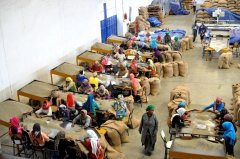
Ethiopian coffee trading system, coffee raw beans Sidamo sun [Sakuran] export system
According to the Ethiopian decree, there are three coffee export systems: (1) the largest private processing plant system that has been exported through ECX bidding; (2) the cooperative system; and (3) the single farm system. In these three systems, cooperatives and single manors can be exported directly without competitive bidding through ECX, which can be said to have completely reliable traceability / product resumes (traceability).

Ethiopian geisha Nefas coffee introduces the flavor characteristics of geisha coffee beans. What is Gushi coffee?
Professional Coffee knowledge Exchange more information on coffee beans Please pay attention to Coffee Workshop (Wechat official account cafe_style) Nefas Farm all these coffees are grown in the shade of trees because the farm is covered by thick forest and the soil is mainly loam. Nefas Farm is located in the West Dama area, about 514km from Addis Ababa, the capital of Ethiopia. The farm has grown from 2000

Taste characteristics of fermented natural sun-cured Ethiopian coffee varieties introduction to the flavor of fine coffee beans in the manor
Ethiopia has unique natural conditions suitable for growing all imaginable varieties of coffee. As a upland crop, Ethiopian coffee beans are mainly grown in areas between 1100 and 2300 meters above sea level, roughly distributed in southern Ethiopia. Deep soil, well drained soil, weakly acidic soil, laterite and soil are soft and contain

Ethiopian coffee powder introduction of Ethiopian coffee beans
Now, Ethiopia produces coffee not only for drinking, but also for coffee lovers around the world to enjoy it better. With the continuous improvement of the quality and production efficiency of the coffee industry, Ethiopia is now more than ever able to provide high-quality coffee to even the most picky and discriminating customers. Ethiopia hopes that not only the world

Ethiopian coffee climate
Following Cafe (Wechat official account vdailycom) found that Beautiful Cafe opened its own shop for Ethiopian Coffee Climate if you like coffee, there is one more reason to pay attention to climate change. Ethiopia, an important coffee producer, will be greatly affected if global warming is not contained, and at worst nearly 60% of the country's coffee-producing areas will be affected, according to a new study.

Description of Ethiopian Coffee Flavor with Jasmine Flavor introduction to Fine Coffee Bean Manor
Local aborigines often grind the fruit of the coffee tree and knead it with animal fat to make many ball-shaped balls. These indigenous tribes use these coffee balls as precious food for soldiers who are about to go out to battle. It was not until around the 11th century that people began to use boiled coffee as a drink. In the 13th century, Ethiopian troops invaded Yemen

A brief introduction to the flavor and taste characteristics of Cochel Village, an Ethiopian coffee farm with delicate and rich taste.
[product name]: Ethiopia EthiopiaYirgacheffe [quality rating]: WPGrade2 [baking]: recommended moderate baking (MediumRoastorCityRoast) [grade]: excellent [granule]: ★ full [acidity]: ★★★★ slightly sour, dark chocolate aftertaste [balance]: ★★★★ is very stable [flavor]

Ethiopia Humbela Akabi Farm Coffee good introduction to Humbela Akabi Farm
For more information on coffee beans, please follow Coffee Workshop (Wechat official account cafe_style) Akrabi is a coffee trader in Ethiopian Ahmaric, which seems to be suitable for coffee traded through the Ethiopian Mercantile Exchange (ECX). But unlike previous ECX batches, traceability was cancelled shortly after it was obtained. these batches have a historical record.

Introduction to the unique flavor and taste of Ethiopian coffee manor
China Coffee Network Ethiopia's coffee market management agency is the Ethiopian Coffee and Tea products Administration. There are two auction centers in the country, one in the capital Addis Ababa (Addis Ababa) and the other in Dire Dawa in eastern Ethiopia. Coffee growers bring fresh fruit or to private coffee processing plants or cooperative systems

Ethiopian Coffee | recommendation of individual Coffee beans-Honey-treated Coffee | Guji Sukukuto Manor
Professional coffee knowledge exchange more coffee bean information please follow the coffee workshop (Wechat official account cafe_style) Ethiopian coffee | individual coffee bean recommendation-tanning cherry Ethiopia SFP Suke Quto/Tade GG BunaSadi Honey G1 by Tesfaye Bekele Ethiopia Guji G1 Sukuto Manor Bonasati trio honey treatment